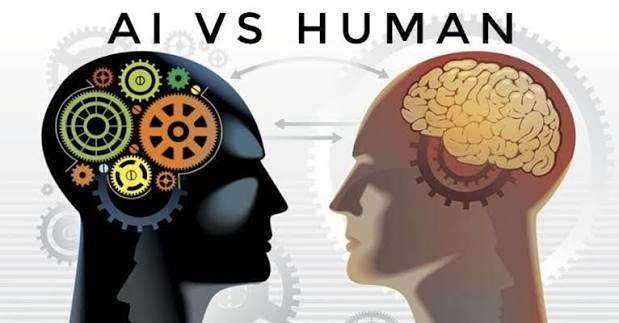
AI vs Humans
AI is genuinely excellent at execution, generating code, recognizing patterns, and producing outputs at speed. What it cannot do is decide what’s worth building, and why. It doesn’t understand value, nor can it measure it. This requires human judgment, which demands contextual relevance, outcomes that help people get their jobs done, ethics and moral balance, and strict adherence to what is right and good, with trust as a non-negotiable tenet. AI cannot reliably address these challenges, and when it can’t, it will attempt to infer them or literally fall back on fabrication. The people who define the problem and ask the right questions before a single line of code is written will always be essential. The engineers who ask the right questions and bring the right insights to guide AI are skills you can deliberately develop as a software developer and systems engineer. That will make you more valuable, not less.
Here’s the deeper truth: AI is not intelligence. It builds upon human intelligence. Large Language Models are probabilistic by nature: they drift, they hallucinate, they require human oversight to stay grounded. They will never represent certainty. Every serious deployment of AI today requires people who understand why a system is behaving the way it is and what to do when it doesn’t. That’s you, if you choose it.
The problems AI is solving today are largely operational — faster, cheaper, more efficient. Those are not the hard problems. The genuinely hard problems facing our civilization involve complexity that overwhelms any model: sustainability, trust, governance, and human cooperation across differences. Solving those will require great engineering (physical, digital, and the evolving biological) combined with the humanities, ethics, and long-term thinking that profit-driven models have consistently undervalued.
AI won’t replace people who can think across those boundaries. It needs them.